- Nimitz Health
- Posts
- Lead, PFAS, and the Funding Cliff
Lead, PFAS, and the Funding Cliff
Lawmakers spar over regulation, rates, and rural systems.

⚡️ NIMITZ HEALTH NEWS FLASH ⚡️
“From Source to Tap: A Hearing to Examine Challenges and Opportunities for Safe, Reliable, and Affordable Drinking Water”
House Energy and Commerce
February 24th, 2026 (recording linked here)
WITNESS
Eric Hill: General Manager, Russellville Water & Sewer Board, Russellville, Alabama, on behalf of the National Rural Water Association
Nicole Murley: Deputy Inspector General performing the duties of the Inspector General, U.S. Environmental Protection Agency
Lindsey Rechtin, CPA: President & CEO, Northern Kentucky Water District, on behalf of the Association of Metropolitan Water Agencies
Erik Olson: Senior Strategic Director for Health & Food, Natural Resources Defense Council
QUICK SUMMARY
Lead service line replacement and PFAS cleanup were framed as urgent public health priorities requiring sustained federal funding and enforceable national standards.
Small and rural systems were described as disproportionately burdened by SRF delays, Davis-Bacon requirements, application complexity, and rising contractor costs.
Water affordability was repeatedly tied to the need for a permanent low-income assistance program alongside infrastructure funding to avoid rate shock.
Climate change and saltwater intrusion were cited as growing threats to drinking water systems, increasing treatment costs and infrastructure vulnerability.
Cybersecurity risks were highlighted as escalating across water utilities, with calls for stronger federal support, clearer guidance, and scalable protections for small systems.
PARTY MESSAGING
🐘 Republicans
Water system challenges were framed as the result of federal overregulation, slow fund disbursement, Davis-Bacon and procurement mandates, and one-size-fits-all rules that disproportionately burden small and rural utilities.
The solution focus was expediting SRF funding, simplifying compliance requirements, increasing flexibility for rural systems, strengthening cybersecurity protections, and ensuring polluters—not utilities—paid for PFAS contamination.
🫏 Democrats
Drinking water risks were framed as a public health and environmental justice crisis driven by aging infrastructure, lead pipes, PFAS contamination, climate change, and underinvestment in federal oversight.
The solution focus was sustaining and expanding federal infrastructure funding, maintaining strong enforceable EPA standards, creating a permanent low-income water assistance program, investing in climate resilience and cybersecurity, and protecting scientific integrity within EPA.
MEMBER OPENING STATEMENTS
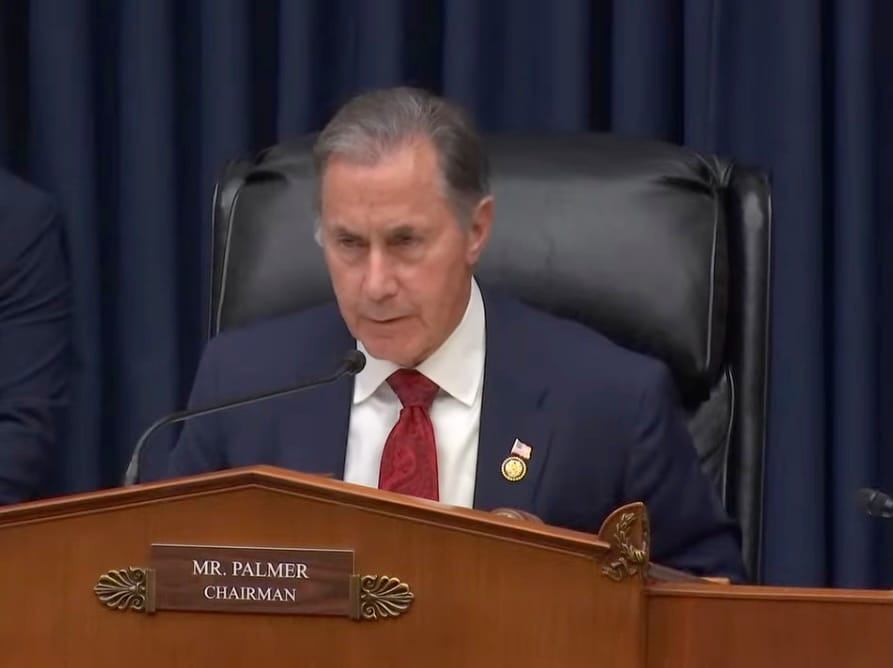
Subcommittee Chair Palmer (R-AL) stated that the hearing provided a timely opportunity to examine the safety, reliability, and affordability of the nation’s drinking water systems. He referenced the recent Potomac interceptor collapse near Washington, DC that released over 200 million gallons of untreated sewage into the Potomac River, prompting a state of emergency and federal coordination of the response. He explained that the committee had begun investigating what was known about the risk of the rupture and whether it could have been prevented. He noted that Congress first enacted the Safe Drinking Water Act more than 50 years ago and that the hearing would assess how well the law was working and whether modernization was needed. He highlighted federal investments, including more than $50 billion provided through the Infrastructure Investment and Jobs Act, and expressed interest in oversight of how those funds had been used. He concluded by emphasizing the need for common-sense solutions to protect and modernize drinking water systems.
Subcommittee Ranking Member Tonko (D-NY) stated that drinking water issues were among the subcommittee’s most important responsibilities and emphasized the essential role local governments played in delivering safe, reliable, and affordable water. He recognized the 50th anniversary of the Safe Drinking Water Act and described it as a public health success while acknowledging that significant challenges remained, including cyber threats, lead pipes, and emerging contaminants like PFAS. He cited EPA estimates that drinking water systems would require $625 billion over the next 20 years and described the Infrastructure Investment and Jobs Act as a critical step in addressing those needs. He urged continued strong federal financial commitments, warning that reductions in funding would burden local governments and ratepayers. He called for clearer criteria for setting national drinking water standards and advocated for a permanent low-income water assistance program. He concluded by expressing hope for bipartisan collaboration to strengthen drinking water protections.
Full Committee Chair Guthrie (R-KY) stated that the Safe Drinking Water Act, first enacted in 1974 and amended multiple times, established a federal framework to ensure safe tap water. He explained that EPA played key roles in financing infrastructure, setting contaminant standards, and protecting drinking water sources, while also emphasizing the important roles of states, local governments, and utilities. He pointed to aging infrastructure, including the recent Potomac sewage tunnel blowout, as evidence of the need for updates. He noted that the Infrastructure Investment and Jobs Act provided an unprecedented $50 billion for water infrastructure but stressed that federal funding alone could not solve the nation’s infrastructure challenges. He stated that Congress should evaluate which policies were working as funding authorities approached expiration. He expressed appreciation for the witnesses and looked forward to a productive discussion on improving drinking water safety, reliability, and affordability.
Full Committee Ranking Member Pallone (D-NJ) stated that the hearing focused on the condition of the nation’s drinking water infrastructure and the federal role in ensuring safe, reliable, and affordable water. He cited the American Society of Civil Engineers’ grade of C-minus for water infrastructure and emphasized that recent federal investments represented only a down payment on the $625 billion needed over 20 years. He highlighted the consequences of underinvestment, including lead service lines and recent sewage pipe failures, and stressed that water infrastructure was often neglected until crises occurred. He called for reauthorizing and increasing funding for the Drinking Water State Revolving Fund as a central strategy for addressing infrastructure needs. He urged modernization of the Safe Drinking Water Act, stronger health-protective standards, and removal of all lead service lines. He rejected the notion that policymakers must choose between affordability and safety and advocated for a permanent water assistance program to ensure equitable access to safe water.
WITNESS OPENING STATEMENTS
Ms. Murley stated that her testimony drew from extensive oversight work examining how EPA ensured safe drinking water and managed the unprecedented influx of infrastructure funding. She emphasized that failures such as those in Jackson, Mississippi, and Flint and Benton Harbor, Michigan, demonstrated the importance of strong federal oversight under the Safe Drinking Water Act. She explained that EPA set national standards, oversaw state programs, enforced compliance, and administered State Revolving Fund programs, including significant funding from the Infrastructure Investment and Jobs Act. She noted that while EPA had implemented improvements based on OIG recommendations—such as strengthening cybersecurity guidance, expanding technical assistance, and enhancing fraud prevention measures—risks related to weak internal controls and data quality remained. She warned that gaps in documentation, financial reporting, and oversight could obscure fraud or mismanagement. She concluded that consistent oversight, reliable data, and clear guidance were essential to ensure that historic investments delivered meaningful results.
Mr. Olson stated that the bipartisan infrastructure law represented an important but insufficient investment in addressing the nation’s drinking water needs. He cited estimates ranging from $625 billion to over $1 trillion in infrastructure needs and emphasized that significant additional investments were required. He acknowledged progress under the Safe Drinking Water Act but highlighted ongoing concerns related to lead, PFAS, perchlorate, and other contaminants. He advocated for a broader, technology-based approach to contaminant removal rather than addressing chemicals individually. He expressed concern about efforts to repeal or delay PFAS standards while noting support for the lead and copper rule. He also urged increased federal funding, a permanent low-income water assistance program, stronger rate structures to protect vulnerable households, and policies requiring polluters to pay for contamination cleanup.
Mr. Hill described his career path from a small rural system operator to general manager to illustrate the realities facing small water systems. He explained that most community water systems served fewer than 10,000 people but faced the same federal mandates as large utilities with far fewer resources. He detailed how State Revolving Fund investments had enabled his system to modernize equipment, strengthen cybersecurity, repair infrastructure, and comply with new regulations. However, he stated that the application and compliance process was complex and burdensome for small systems and urged greater flexibility, simplified reporting, and targeted waivers. He highlighted workforce challenges, noting that much of the water workforce would retire within the next decade, and emphasized the importance of apprenticeship and technical assistance programs. He also stressed that water systems were passive receivers of PFAS contamination and should not bear cleanup costs, and he called for regulatory approaches that recognized the limitations of small systems.
Ms. Rechtin stated that aging and vulnerable water infrastructure required sustained federal investment, citing the recent Potomac interceptor collapse as an example of infrastructure failure. She explained that federal programs such as the Drinking Water State Revolving Fund had enabled her utility to finance critical improvements while moderating rate increases for customers. She emphasized that water infrastructure investments generated substantial economic returns and that failure to invest would result in significant economic losses and service disruptions. She urged Congress to reauthorize core financing programs before they expired and to maintain strong funding levels. She also recommended holding PFAS polluters accountable, expanding permanent low-income water assistance, strengthening cybersecurity resources such as the Water ISAC, and ensuring science-based regulatory development at EPA. She concluded that these measures would help utilities address emerging challenges while maintaining safe, reliable, and affordable drinking water.
QUESTION AND ANSWER SUMMARY
Rep. Palmer (R-AL) asked what aspects of the SRF application and reporting process had created the greatest challenges for small rural systems and how important technical assistance had been. Mr. Hill said delays in fund distribution, overwhelmed state agencies, contractor shortages, rising bid costs, and scoring systems had created barriers, and he said timely funding and trusted technical assistance providers had been essential.
Rep. Palmer (R-AL) asked whether Build America, Buy America requirements and cybersecurity risks had been concerns for rural systems and whether EPA data systems adequately interfaced with state systems for oversight. Mr. Hill said cybersecurity vulnerabilities in older telemetry systems had been a major concern and that SRF funds had allowed encrypted, compliant upgrades, while Ms. Murley said inconsistent data formats, antiquated systems, and paper-based records across states had complicated oversight and transparency.
Ranking Member Tonko (D-NY) asked how the expiration of IIJA supplemental funding would affect rural systems and why sustained federal infrastructure funding had been important for protecting public health. Mr. Hill said higher funding levels had made a substantial impact but rollout delays and deadlines had strained implementation, Ms. Rechtin said SRF loans had enabled long-term capital improvements without sharply increasing rates, and Mr. Olson said continued federal investment had been critical to address widespread lead and PFAS contamination and that failure to renew funding could result in serious health consequences.
Ranking Member Tonko (D-NY) asked what risks Americans would face if Congress did not reauthorize historic funding levels and whether EPA staffing reductions could impair oversight. Mr. Olson warned that without funding and enforcement, thousands of lives could be at risk due to contaminants like lead and PFAS, and Ms. Murley said workforce planning and grants oversight had been ongoing management challenges that OIG continued to monitor as staffing and organizational changes occurred.
Rep. Peters (D-CA) asked whether raising the WIFIA federal share cap would help utilities finance drought-related and low-income infrastructure projects. Ms. Rechtin said her utility had not used WIFIA and would follow up, Mr. Olson said expanding WIFIA had been a useful financing tool to address urgent infrastructure needs, and Mr. Hill said rural systems would benefit from increased financing flexibility.
Rep. Latta (R-OH) asked whether federal policymakers understood workforce shortages, certification challenges, contractor availability, supply chain constraints, and the ratepayer impacts of regulatory mandates. Mr. Hill said apprenticeship programs and state technical assistance had been critical but needed greater support and faster federal response mechanisms, and Ms. Rechtin said utilities relied entirely on ratepayers and therefore carefully prioritized projects through strategic planning to balance compliance, infrastructure needs, and affordability.
Rep. Ruiz (D-CA) asked what federal measures could maintain water affordability while meeting safety standards and what systems needed to protect infrastructure from environmental threats. Mr. Olson said expanded infrastructure funding, a permanent low-income water assistance program, and improved rate structures had been key solutions, and Ms. Rechtin said holding polluters accountable and ensuring funding for regulatory compliance had been essential to protect source waters.
Rep. Griffith (R-VA) asked whether water utilities should bear liability for PFAS contamination traced to point-source discharges, whether EPA’s GenX advisory level had been reasonable and timely, and whether utilities should have notified consumers upon detecting elevated levels before updated guidance. Mr. Hill and Ms. Rechtin said utilities were passive receivers and should not bear CERCLA liability, Ms. Murley said advisory timing questions were better directed to EPA program officials but would follow up, and Mr. Hill said utilities should generally communicate promptly once contamination was known while acknowledging the difficulty when formal hazard guidance had not yet been issued.
Rep. Pallone (D-NJ) asked what kinds of industries had relied on the water provided by the Northern Kentucky Water District and whether sustained federal investment had been critical to addressing PFAS and lead. Ms. Rechtin said the utility had served a wide range of users including hospitals, schools, and daycares, and she said sustained funding had been beneficial because treatment like granular activated carbon carried both capital and operating costs.
Rep. Pallone (D-NJ) asked why strong, enforceable national drinking water standards had been important and whether the country could have both protective standards and affordable water through tools like a permanent water assistance program. Mr. Olson said national standards had been necessary because some systems otherwise did not address serious contaminants like PFAS and lead, and he said safe and affordable water had required combining infrastructure investment with a low-income water assistance program rather than trading safety for affordability.
Rep. Joyce (R-PA) asked how unclear or conflicting EPA guidance to states on SRF use had prevented efficient fund distribution and how regulatory uncertainty had affected small systems’ long-term planning. Ms. Murley said unclear guidance had hindered states and communities from applying for, completing, and complying with programs and cited examples where confusion affected funding implementation, while Mr. Hill said small systems lacked dedicated compliance staff and relied heavily on state rural water associations and technical assistance providers to navigate uncertainty while trying to secure critical infrastructure funds.
Rep. Joyce (R-PA) pressed whether guidance confusion had affected compliance and how communities could handle compliance costs amid unclear obligations. Ms. Murley said confusion could affect compliance and said OIG oversight and corrective actions had been meant to improve EPA guidance so programs functioned better.
Rep. Soto (D-FL) asked how rising seas and saltwater intrusion linked to climate change had been affecting water systems and what role the Inspector General should have played as EPA actions shifted. Mr. Olson said saltwater intrusion had contaminated surface and groundwater and could worsen corrosion and disinfection byproducts, while Ms. Murley said OIG did not opine on policy merits but assessed whether EPA had followed laws, procedures, and internal controls when making and implementing decisions.
Rep. Soto (D-FL) asked how rising water tables had disrupted gravity systems and pressed whether OIG would determine if EPA actions were contrary to mission or corrupt. Mr. Olson said higher water tables and salinity had driven up treatment needs and could require expensive processes like reverse osmosis, while Ms. Murley said OIG’s role focused on process compliance rather than judging policy substance.
Rep. Carter (D-LA) asked how climate-driven extreme events and saltwater intrusion had affected utility operations and costs and what tools Congress should provide to address cyber threats. Mr. Olson said droughts, saltwater wedges, and wildfires had increased contamination risks and costs—citing wildfire-related pipe melting and benzene contamination—and he said a national approach and stronger resources were needed to address escalating cybersecurity threats, especially for small systems.
Rep. Carter (D-LA) asked what the Inspector General’s job had been and whether she felt empowered to call out waste, fraud, abuse, or improper practices. Ms. Murley said her job had been to ensure EPA programs operated efficiently and effectively and to prevent and detect waste, fraud, and abuse, and she said she had been empowered to do so while noting OIG was not a policy-making body.
Rep. Fedorchak (R-ND) asked how Congress should adjust SRF implementation or regulatory timelines for small communities, what reforms mattered most for rural access to funds, and how EPA balanced health protections with affordability. Mr. Hill said the SRF process needed to be expedited because delays reduced bidder participation and raised costs, he said Davis-Bacon paperwork had been a major burden while he supported Buy America, Buy America for cybersecurity but noted practical equipment constraints, and Ms. Murley said OIG had not done specific work on EPA’s cost-benefit balancing and would take back questions about pursuing that oversight.
Rep. Fedorchak (R-ND) asked whether current SRF and WIFIA structures were sufficient to meet the long-term investment gap. Ms. Rechtin said continued SRF access had been instrumental for her utility’s investments and remained critical for stability and predictable long-term planning.
Rep. Menendez (D-NJ) asked how Newark’s lead service line replacement program had served as a model and whether more federal resources and dedicated lead funding were still needed, including support for lead reduction in schools and child care. Mr. Olson said Newark had been a model because it replaced over 20,000 lines quickly, adopted an ordinance to streamline replacement, and paid 100% of costs to avoid excluding low-income residents, and he—along with Mr. Hill and Ms. Rechtin—said additional federal resources and dedicated lead funding were still necessary while he said Congress should strengthen programs to support filters and protections for schools and child care.
Rep. Menendez (D-NJ) asked whether the Trump administration had underestimated the national lead service line count and what public health consequences could follow from undercounting, and he asked whether staffing losses eroded OIG independence. Mr. Olson said he had concerns undercounting would reduce funding for places that needed it, while Ms. Murley said she did not share the view that staff losses eroded independence but said the office was hiring and acknowledged OIG could always do more oversight.
Rep. Carter (R-GA) asked how small systems prioritized cybersecurity investments against aging infrastructure needs, how Congress could help utilities improve cyber resilience, and where gaps existed in EPA’s cybersecurity approach. Mr. Hill said implementing a SCADA system had been his top cybersecurity priority and said SRF loans remained essential to replace aging infrastructure, Ms. Rechtin said cyber threats were growing with internet-connected operations and said Congress should fund upgrades and scalable best practices and support information sharing, and Ms. Murley said EPA lacked mandatory cybersecurity requirements and that oversight was hindered by limited state reporting in intended use plans, while noting OIG was reviewing IIJA-funded resilience projects and prior reports had identified vulnerabilities.
Rep. Carter (R-GA) asked whether utilities had experienced cybersecurity threats and how systems shared threat information. Ms. Rechtin said her utility faced threats daily and maintained strong cyber defenses, while Mr. Hill said systems used channels like CISA and WaterISAC to share information and stay ahead of threats.
Rep. Landsman (D-OH) asked what role EPA’s Office of Research and Development had played in keeping drinking water safe and whether OIG was reviewing changes affecting ORD and scientific integrity. Mr. Olson said ORD was central to studying contaminant health effects, developing PFAS methods, and understanding lead corrosion and mitigation, while Ms. Murley said OIG monitored scientific integrity and organizational changes, had addressed scientific interference complaints in past work, and had previously issued findings on oversight issues in ORD without reporting current concerns about the specific restructuring.
Rep. Landsman (D-OH) pressed whether OIG supported protecting ORD jobs and independence. Ms. Murley said staffing decisions were not for OIG to make but said the office took independence seriously and focused on ensuring adherence to scientific integrity processes.
Rep. Pfluger (R-TX) asked what the most important element of operating a safe drinking water system had been, how small utilities prioritized new requirements, whether Washington misunderstood the burden of recurring mandates, whether small systems faced unique challenges accessing federal funds, and how small systems planned for long-term reliability in drought-prone regions. Mr. Hill said certified operators were the most critical component, said small systems struggled financially to keep up as new rules kept coming, cited repeat testing burdens like perchlorate, and described how his system built drought resilience through conservation planning, interconnections, and major pipe and pump investments, while Ms. Murley said OIG work showed state capacity challenges varied by demographics and administrative capability and pointed the member toward EPA technical assistance pathways for communities seeking help.