- Nimitz Health
- Posts
- Shutdown Season is Back (Did It Ever Leave?)
Shutdown Season is Back (Did It Ever Leave?)
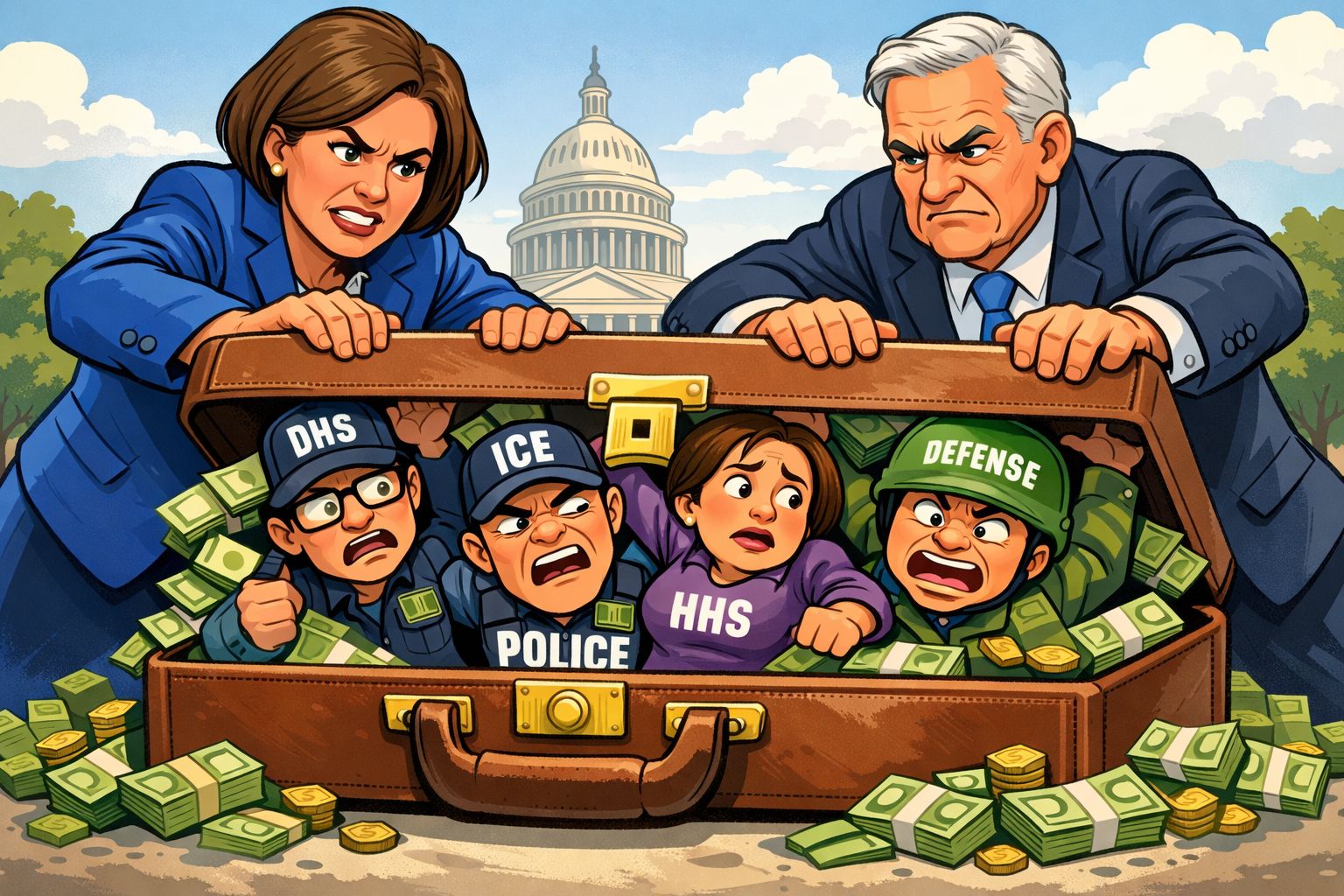
Senate Democrats are blocking the DHS/HHS/Defense funding bill after a Minneapolis shooting, pushing Congress toward a shutdown deadline.

Happy Monday! Washington returns this week to a political pressure cooker. With a government shutdown deadline just days away, a sudden revolt from Senate Democrats over immigration enforcement has imperiled a bipartisan funding deal, leaving leadership scrambling for a path forward. Here is what we are tracking:
In this week’s Nimitz Health:
Federal News: Senate Democrats block DHS funding bill, U.S. formally exits the WHO, and the new CDC advisory chair questions polio vaccines
State News: California joins WHO global network and Illinois faces HHS funding threat over abortion referral laws
Industry News: Insurance CEOs grilled on pay and UnitedHealth pledges to rebate ACA profits
WHO’S HAVING EVENTS THIS WEEK?

Blue Star: Senate Event
Thursday, January 29th
*Senate Aging: “Truth in Labeling: Americans Deserve to Know Where Their Drugs Come From” at 9:30 am. Watch here.
*Will be covered by Nimitz Health. Please email [email protected] if you would like a readout of any other hearings.
Sign up for The Nimitz Report for Veteran Health-Related Hearings
NEWS DRIVING THE WEEK
Federal News
Congress has returned to Washington facing a rapidly deteriorating spending landscape, with a partial government shutdown looming on the January 30 deadline. While the House successfully cleared a funding package last Thursday that covers Defense, Health and Human Services (HHS), and the Department of Homeland Security (DHS), the legislation has hit a wall in the Senate. Following the fatal shooting of a Minneapolis resident by federal agents on Saturday, Senate Democrats have revolted against the DHS portion of the bill, vowing to block the package unless strict oversight measures for ICE are included. With Senate Minority Leader Chuck Schumer and key senators like Catherine Cortez Masto and Jacky Rosen now opposing the measure, the path to avoiding a shutdown remains unclear as the Friday deadline approaches.
Beyond the spending fight, the Trump administration continues to aggressively reshape federal health agencies and policy. On the international stage, the United States officially withdrew from the World Health Organization (WHO) last Thursday, with officials asserting that bilateral agreements and the CDC will suffice for tracking global outbreaks.
Domestically, the administration is pivoting away from established public health norms. The new chair of the CDC’s Advisory Committee on Immunization Practices (ACIP), Dr. Kirk Milhoan, stated in a podcast released Thursday that "individual autonomy" rather than public health is his committee's "first order," specifically questioning the necessity of polio immunization. Concurrently, CDC Deputy Director Ralph Abraham dismissed concerns about the U.S. potentially losing its measles elimination status after a year of consistent transmission, calling it "the cost of doing business" in a free society.
Social policy also saw significant movement last week, timed to coincide with the March for Life. Vice President JD Vance announced an expansion of the "Mexico City Policy," which will now block U.S. foreign aid to any organization that discusses abortion, gender identity, or diversity, equity, and inclusion (DEI).
On the research front, the NIH reinstated a ban on human fetal tissue research, cancelling active grants and halting internal projects. Meanwhile, HHS Secretary Robert F. Kennedy Jr. is testing a "Make America Healthy Again" midterm stump speech that notably sidesteps his controversial vaccine views in favor of polling-friendly topics like reducing chronic disease and regulating food additives.
State News
The divide between Democratic state administrations and the federal government is widening, with California leading the charge in foreign policy defiance. Following the Trump administration's official withdrawal from the WHO, Governor Gavin Newsom announced on Friday that California will independently join the WHO’s Global Outbreak Alert and Response Network. Newsom explicitly framed the partnership as a rebuke to the President, positioning his state as a counterweight to the administration's isolationist health agenda and aiming to maintain international public health data flows despite the federal exit.
In the Midwest, Illinois is facing direct pressure from federal regulators over its abortion policies. The HHS Office for Civil Rights has accused the state of violating federal conscience protections by requiring medical providers to refer patients to other doctors for abortion services if they object to performing the procedure themselves. The administration has threatened to withhold HHS funds if Illinois does not rescind the requirement within 30 days, although state officials, including Governor JB Pritzker, have vowed to defend the law and "fortify fundamental reproductive rights" against what they term political attacks.
Industry News
Health insurance executives faced a hostile reception on Capitol Hill last week, navigating "role reversal" hearings where Republicans attacked their profit margins while Democrats largely defended the private sector against blame for rising costs. During tense exchanges regarding executive compensation—including a moment where CVS Health executives were grilled over multi-million dollar pay packages—CEOs attempted to shift the blame for soaring premiums onto hospital consolidation and drug prices. In a strategic move timed just ahead of these hearings, UnitedHealth Group pledged to voluntarily rebate all profits generated from its Affordable Care Act (ACA) marketplace plans in 2026 to customers, a gesture intended to signal a commitment to affordability amid the expiration of enhanced federal subsidies.
In the health technology sector, trust in data-sharing networks is under scrutiny. A coalition of over 60 major health systems, including NYU Langone and Stanford Health Care, sent a letter to the Sequoia Project demanding stricter vetting and anti-fraud measures for the TEFCA and Carequality data networks. This follows a lawsuit by Epic alleging that some companies are misrepresenting themselves to improperly access patient records, prompting calls for federal task forces and penalties to secure the nation's interoperability infrastructure.
Finally, a new food safety crisis is emerging this morning as Danone shares dropped following a recall of infant formula products in Europe and Singapore due to potential contamination with the toxin cereulide. This follows a similar recall by Nestlé, sparking fears of a broader industry issue reminiscent of past supply chain disruptions.
On a more positive global note, the Gates Foundation and OpenAI have announced a $50 million partnership to deploy AI tools in African health clinics, aiming to alleviate chronic staff shortages by assisting with triage and administrative burdens.
FOR FUN
We hope everyone stayed warm this weekend! Here is a look back at DC’s biggest snow storms through history.
JOIN THE NIMITZ NETWORK!
Enjoying our updates? Don’t keep it to yourself — forward this email to friends or colleagues who’d love to stay informed. Please subscribe to our other publications by clicking below:
|

|
