- Nimitz Health
- Posts
- This Week in Health Policy
This Week in Health Policy
Appropriations brinkmanship, ACA subsidy negotiations, and the next wave of AI oversight.

Washington is doing what it does best right now, speeding toward a funding deadline while picking fights that spill directly into health policy. The same week Congress is trying to avoid a shutdown, lawmakers are wrestling over ACA subsidy revival terms, prior authorization and AI in Medicare, and a fast moving HHS agenda that is driving real uncertainty for states, providers, and payers. Here’s what we’re tracking.
In this week’s Nimitz Health:
Federal News: Appropriations brinkmanship, ACA subsidy revival talks, RFK Jr. vaccine schedule, and dietary guidelines turbulence
State News: Virginia health initiative, Utah AI prescribing pilot, Wyoming abortion pill ruling, and flu surge across states
Industry News: Major biopharma deals, Hepatitis B trial readouts, and new nutrition policy impact on food and beverage
WHO’S HAVING EVENTS THIS WEEK?

Blue Star: Senate Event; Green Star: Other Event
Wednesday, January 14th
*Senate HELP: “Protecting Women: Exposing the Dangers of Chemical Abortion Drugs” at 10 am. Watch here.
Thursday, January 15th
Senate HELP: “Executive Session to Discuss S.1157, S.921, S.2169, S.272” at 10 am. Watch here.
*Will be covered by Nimitz Health. Please email [email protected] if you would like a readout of any other hearings.
Sign up for The Nimitz Report for Veteran Health-Related Hearings
NEWS DRIVING THE WEEK
Federal News
Washington is locked in another fight over both money and messaging. With the January 30 government funding deadline closing in, House leaders are trying to move a three-bill minibus that covers only a fraction of federal spending. Appropriators from both parties have worked to keep talks civil, but conservatives like Chip Roy and Andy Harris are once again using procedural tools to pressure Speaker Mike Johnson. Senate progress is slowed by side battles over regional projects, and many expect another continuing resolution. Behind the scenes, Rep. Ilhan Omar’s earmark requests have sparked controversy, giving Republicans new ammunition against Democrats’ use of community project funds and further complicating negotiations
Health policy is at the center of the funding drama. The House voted 230–196 to restore the enhanced Affordable Care Act subsidies that expired at the end of last year, with 17 Republicans joining Democrats. Speaker Johnson dismissed the bill as “a bad policy,” but moderates say rising premiums in their districts made inaction politically impossible. The Senate is now debating a narrower deal led by Sen. Bernie Moreno and Sen. John Thune that would add income caps, require at least a five-dollar monthly premium, and allow enrollees to take subsidies as cash in health savings accounts. The biggest sticking point remains abortion coverage. Conservatives insist that any extension must explicitly block funds from reaching plans that cover abortion, while Democrats argue that ACA safeguards already satisfy Hyde protections
That tension exploded when President Trump told lawmakers to be “flexible” on abortion to secure a deal. The remarks stunned Republicans and drew swift rebukes from anti-abortion groups such as Susan B. Anthony Pro-Life America, which accused Trump of “abandoning his commitment.” GOP senators like James Lankford quickly vowed that “Hyde is nonnegotiable,” and even allies privately admitted the president’s message threw negotiations off course
Congress is also taking aim at Medicare’s growing use of artificial intelligence. The new CMS “WISeR” program lets AI systems pre-screen claims for high-fraud procedures. Republicans back the experiment as a cost-saving tool, but Democrats warn it could wrongly deny care and are pushing a bill to cancel the pilot. Later this month, Energy and Commerce Chair Brett Guthrie plans to haul in major insurer CEOs to testify on both prior authorization reform and Medicare fraud prevention
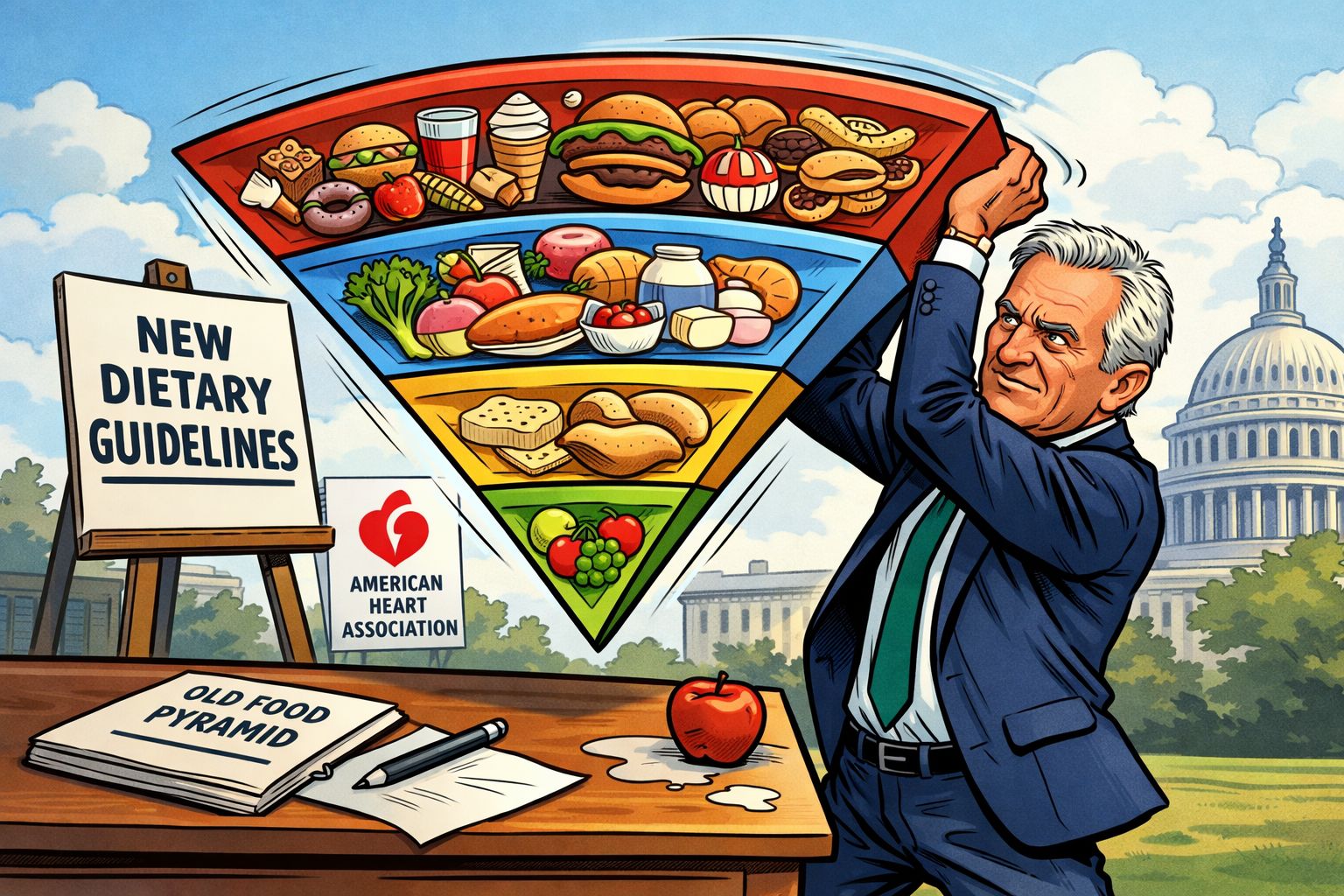
Elsewhere, RFK Jr.’s HHS continues to spark alarm. His decision to downgrade several childhood vaccines from “routine” to “shared decision-making” status has drawn bipartisan concern about confusion and falling immunization rates. He also reignited a fight over nutrition policy by attacking the American Heart Association’s influence and unveiling draft dietary guidelines that ease long-standing limits on saturated fats and sodium. These moves have public-health groups scrambling to assess how much formal policy will actually shift.
Finally, the administration froze social-service funding to five Democratic-led states as part of a broader review of “program integrity” and announced a new drug-pricing agreement with Johnson & Johnson that ties some Medicaid prices to foreign benchmarks and opens the door to direct-to-consumer discounts. Industry observers view both actions as populist showpieces that could cause long-term volatility for providers and payers
State News
Virginia secured national attention as HHS and HUD launched “Make Petersburg Healthy Again,” a high-touch initiative targeting medical deserts, food insecurity, and lead exposure in one of the state’s most underserved cities. The program links federal resources directly to local partners and could become a model for other post-industrial communities if results are positive
Utah is running a first-of-its-kind pilot that allows AI systems to renew certain prescriptions without human intervention. Regulators are calling it a test case for the balance between innovation and patient safety. Meanwhile, the Wyoming Supreme Court struck down the country’s first abortion-pill ban, declaring that medical decisions fall under the state’s constitutional right to health care. The ruling is expected to shape challenges to similar bans across the Mountain West.
Flu season has added pressure to state systems. CDC data show the highest rate of flu-related doctor visits since 1997, with more than 11 million illnesses and 5 000 deaths so far. Hospitals in HHS Region 8, which includes Wyoming and Utah, are reporting the highest positivity rates in the nation.
Industry News
The biopharma sector opened 2026 with renewed momentum. Merck is in late-stage talks to buy Revolution Medicines for up to $32 billion, a blockbuster oncology play as the company braces for the loss of Keytruda exclusivity. Amgen followed with an $840 million acquisition of UK-based Dark Blue Therapeutics, extending its targeted protein-degradation work in leukemia .
GSK reported strong phase-3 data for its hepatitis B candidate bepirovirsen, calling the results a step toward a functional cure and a major opportunity in a field long dominated by chronic therapy. Across the sector, analysts say this wave of deals and data underscores renewed investor confidence in oncology and infectious-disease pipelines after a quiet 2025.
The food and nutrition industry is bracing for a shake-up as the new U.S. Dietary Guidelines call for higher protein intake and lower sugar, reversing years of guidance. The announcement coincided with RFK Jr.’s push to end what he calls “the war on saturated fat,” drawing both praise from keto-advocates and concern from cardiologists. Alcohol guidelines were also tightened, with experts warning that even small amounts carry health risks.
FOR FUN
The Texans and Steelers face off tonight at 8:15pm ET. Watch on ABC, ESPN, and ESPN2. It will also stream live on the ESPN App, ESPN Unlimited, Fubo, YouTube TV, Hulu, and the NFL+ app (mobile only).
JOIN THE NIMITZ NETWORK!
Enjoying our updates? Don’t keep it to yourself — forward this email to friends or colleagues who’d love to stay informed. Please subscribe to our other publications by clicking below:
|

|
